Artist 3d App Icon Illustration Vector
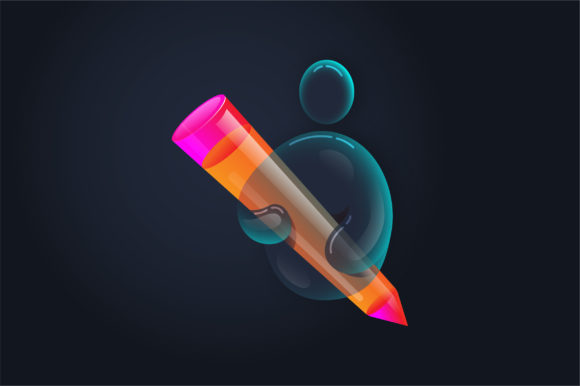
In the current digital landscape, visual hierarchy and immediate recognition are not merely aesthetic preferences; they are functional necessities. For developers, designers, and product managers, the app icon serves as the primary touchpoint between a user’s device and the application itself. It is often the first—and sometimes only—impression before any code is executed or content is consumed. This reality places immense pressure on design assets to be versatile, scalable, and stylistically distinct. The Artist 3d App Icon Illustration Vector emerges as a practical resource in this context, offering a pre-constructed solution that balances modern three-dimensional aesthetics with the technical requirements of vector-based workflows.
This evaluation examines the utility, technical specifications, and practical applications of this specific illustration asset. Rather than viewing it simply as a decorative image, we will analyze it as a component of a broader design system. The goal is to determine whether this asset provides sufficient flexibility and quality for professional use cases ranging from mobile development to brand identity projects.
Understanding the Core Concept
The term "3D" in contemporary graphic design often refers to a style that mimics depth, lighting, and texture without relying on raster-based rendering engines. The Artist 3d App Icon Illustration Vector leverages this approach to create an image that feels tactile and modern while remaining mathematically precise. Unlike flat design, which can sometimes appear static or dated, 3D-inspired vector art introduces gradients, shadows, and perspective that draw the eye. However, unlike full 3D renders (such as those created in Blender or Cinema 4D), vector-based 3D styles remain lightweight and infinitely scalable.
The description provided by the creator notes the use of a "suitable color palette" to achieve a "timeless feel." In design theory, timelessness is achieved through restraint. Overly trendy colors or complex textures age quickly, requiring frequent updates to maintain relevance. By selecting a balanced palette, this illustration aims to avoid fleeting trends, making it a safer investment for long-term branding. The style is intended to be adaptable, allowing it to fit into various contexts without clashing with surrounding interface elements.
Technical Specifications and File Formats
One of the most critical aspects of any digital asset is its file structure. The Artist 3d App Icon Illustration Vector is distributed within a zip file containing multiple formats: AI, EPS, JPG, and SVG. Each format serves a distinct purpose in the design workflow, and having access to all of them significantly increases the asset's utility.
- AI and EPS Files: These are the native editable files for Adobe Illustrator and compatible vector software. They contain the underlying paths, layers, and color codes. For a designer, this is the most valuable component because it allows for deep customization. You can modify individual shapes, adjust gradient stops, or change the color scheme entirely to match a specific brand guideline. The presence of these files indicates that the asset is built with clean vector logic, rather than being a flattened image with unnecessary complexity.
- SVG File: The Scalable Vector Graphics format is essential for web development. SVGs allow the icon to scale perfectly on high-resolution displays (Retina screens) without pixelation. For websites and responsive web apps, this file ensures crisp presentation across all devices. It also keeps page load times low compared to high-resolution PNGs or JPGs.
- JPG File: While less flexible than vector formats, the JPG provides a rasterized preview. This is useful for quick mockups, presentations to stakeholders who may not have vector editing software, or for platforms that do not support SVG uploads directly.
The inclusion of both source and export formats demonstrates a professional understanding of the end-user’s needs. It removes the friction typically associated with converting assets, allowing teams to move from concept to implementation more efficiently.
Design Quality and Aesthetic Analysis
Evaluating the aesthetic quality of the Artist 3d App Icon Illustration Vector requires looking at how well it executes the 3D illusion using vector tools. High-quality vector 3D designs rely on careful layering of shapes and precise gradient mapping to simulate light sources. If done poorly, the result can look muddy or artificial. However, when executed correctly, the effect is polished and engaging.
The emphasis on a "timeless feel" suggests that the design avoids overly glossy or metallic finishes that were popular in earlier decades of UI design. Instead, it likely employs softer gradients and subtle shadows that align with current Material Design or Apple Human Interface Guidelines. This neutrality is a strength. An icon that is too stylized might work for a gaming app but fail for a financial tool. By aiming for a balanced, timeless aesthetic, this asset becomes more universally applicable.
Furthermore, the color palette plays a crucial role in accessibility and readability. Good design ensures that contrast ratios meet WCAG (Web Content Accessibility Guidelines) standards, ensuring that the icon is visible and distinguishable against various backgrounds. A well-chosen palette enhances this visibility, making the icon effective even at small sizes, such as those found on smartwatch screens or notification centers.
Practical Applications and Use Cases
The versatility of the Artist 3d App Icon Illustration Vector makes it suitable for a wide range of professional scenarios. Here are several key areas where this asset adds value:
- Mobile App Development: For startups and indie developers launching new applications, creating original icons from scratch can be time-consuming and costly. This vector asset provides a high-quality starting point. Developers can customize the colors to match their brand while retaining the sophisticated 3D structure, accelerating the prototyping phase.
- Website and Landing Page Design: Modern web design frequently incorporates 3D elements to create immersive experiences. This vector illustration can serve as a hero image, a feature highlight, or a button element. Because it is an SVG, it integrates seamlessly into HTML/CSS frameworks, maintaining sharpness on all screen densities.
- Brand Identity Projects: Small business owners and freelancers often need cohesive visual systems. This illustration can be adapted to serve as a logo mark or a favicon. Its vector nature ensures that it can be scaled up for billboards or down for social media avatars without loss of quality.
- Marketing Materials: Bloggers, publishers, and educators can use this asset in digital newsletters, webinar banners, or course thumbnails. The 3D style grabs attention in crowded feeds, increasing click-through rates compared to flat, generic graphics.
Usability and Workflow Integration
A common pitfall in purchasing digital assets is finding that the file structure is disorganized or difficult to edit. The description emphasizes that the design is "easy to use" and can be "edited as needed." This claim holds weight if the layers are properly named and grouped in the AI/EPS files. Assuming standard best practices were followed, users should be able to isolate specific components—for example, changing the background shape without affecting the central motif.
This modularity is crucial for consistency. In a multi-platform project, you might need variations of the same icon for iOS, Android, and Web. With editable vector files, creating these variations is a matter of adjusting dimensions and aspect ratios, rather than redrawing the entire image. This saves significant time and ensures visual consistency across channels.
Additionally, the lightweight nature of vector files contributes to better performance. Large raster images can bloat website file sizes, impacting SEO rankings and user experience. By utilizing the SVG version, teams adhere to performance best practices, ensuring fast load times without sacrificing visual fidelity.
Limitations and Considerations
While the Artist 3d App Icon Illustration Vector offers many advantages, it is important to approach it with realistic expectations. It is a template, not a bespoke commission. This means that while it is customizable, it may not perfectly align with highly niche or highly specific brand identities without significant modification. Users must be willing to invest time in tweaking colors, shapes, and compositions to make it truly unique.
Another consideration is the learning curve. While the asset is designed to be user-friendly, fully leveraging the AI and EPS files requires proficiency in vector editing software like Adobe Illustrator, Affinity Designer, or Inkscape. Beginners who are unfamiliar with path manipulation may find the editing process challenging, potentially limiting the asset's value if they cannot customize it effectively.
Finally, uniqueness is a double-edged sword. Because this is a commercial asset available to others, there is a possibility that competitors or other users may employ similar designs. To mitigate this, it is recommended to add unique elements or combine this asset with custom typography or additional graphical elements to differentiate your brand.
Conclusion
The Artist 3d App Icon Illustration Vector represents a solid, practical resource for professionals seeking to elevate their visual communication without starting from a blank canvas. Its strength lies in the combination of modern 3D aesthetics with the technical flexibility of vector formats. By providing AI, EPS, SVG, and JPG files, it supports a comprehensive workflow from initial design to final deployment.
For developers, marketers, and designers who value efficiency, scalability, and contemporary style, this asset offers genuine utility. It is particularly well-suited for projects that require a polished, trustworthy, and visually engaging appearance. While it requires some effort to customize and lacks absolute exclusivity, its adaptability and quality make it a worthwhile addition to a creative toolkit. When used thoughtfully, it can enhance the perceived professionalism of a product and improve user engagement through superior visual design.